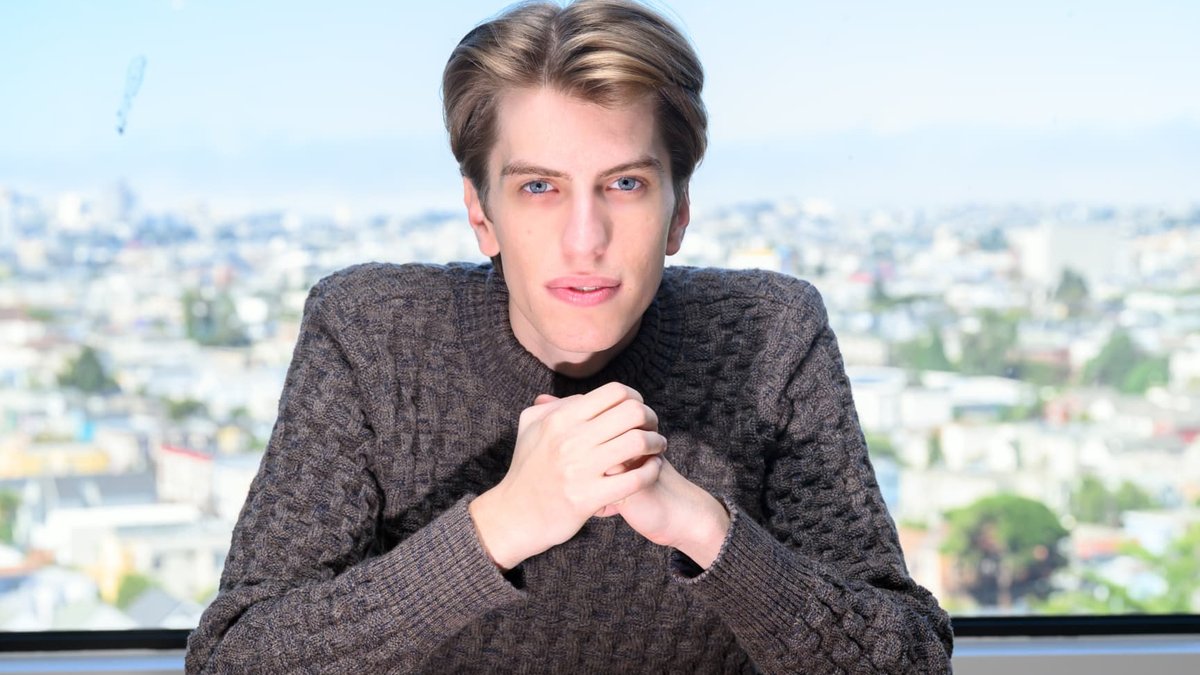
Leopold Aschenbrenner argued he was one of few people in the world who saw the future clearly. In a sprawling, 165-page essay that became required reading in Silicon Valley, the former OpenAI researcher positioned himself as a prophet for the coming age of artificial super intelligence. But this week, the limits of that vision were on display when the AI-themed hedge fund he runs ran into the harsh reality of tumbling semiconductor stocks and Wall Street margin calls.
At its peak earlier this month, his fund sat atop $45 billion in assets. By Thursday, however, after being forced to offload leveraged stock bets to Ken Griffin’s Citadel at a discount, the fund’s holdings plunged to around $10 billion according to people with knowledge of the situation. The fund, named Situational Awareness after his viral manifesto, had to liquidate positions in hard-hit names like SK Hynix and CoreWeave.
The story of Aschenbrenner’s meteoric rise and sudden fall has captivated both Wall Street and tech circles. He has become the most high-profile casualty yet of the volatility accompanying the AI boom. Before this month’s decline, the fund racked up gains of more than 1,000% since inception. At just 24 years old, the Columbia University valedictorian was hailed by online followers as a genius of the next big thing.
Related: Novo Nordisk faces shareholder lawsuit
A Risky Bet on Semiconductors
Critics pointed out that Aschenbrenner had no experience running money prior to launching his fund in July 2024. Some noted that his early work experience was at the doomed crypto firm FTX, where he helped now-disgraced founder Sam Bankman-Fried run a charity out of a Bahamas penthouse. Others on Wall Street noted that in light of reports the fund used as much as 400% leverage, the collapse wasn’t shocking.
“A lot of people saw this blow-up as a matter of not if, but when,” said Jerry Diao, who runs a Wall Street coaching firm. “Maybe his views on AI are correct in the long run, but in the public markets, you have to be prepared for the short-term.”
This collapse highlights a fundamental disconnect in the current investment climate. While long-term believers in artificial superintelligence pour capital into the sector, the mechanisms of modern finance often punish concentrated bets with strict timelines. Market volatility does not distinguish between a visionary thesis and a reckless wager when margin calls are triggered.
Related: Taylor Swift watermarks wedding guest NDAs
Earlier this week, about two-thirds of the fund’s holdings were in long and short positions in public equities. The rest were stakes in private companies, dominated by a multibillion-dollar Anthropic investment. The near-collapse of the fund coincides with the hedge fund manager’s wedding, set for this weekend.
A Controversial Career Path
Born in Germany to physician parents before moving to the U.S., Aschenbrenner showed an early aptitude for math and computer science. He skipped several grades in the German school system, graduating high school at age 15. While at Columbia, he co-founded the school’s chapter of Effective Altruism, a philosophy popular in some tech circles that advocates for founders to make the most money possible in order to help humanity.
That network became his career pipeline, eventually leading him to work with another effective altruism proponent, Bankman-Fried, after his graduation in 2021. He worked for a stint at the Future Fund, the philanthropic arm of FTX, before the crypto firm’s collapse. In 2023, he landed on OpenAI’s Superalignment team.
Related: Rubio Accuses Iran and Cuba of Funding Antifa
After a hacker breached OpenAI’s internal systems, Aschenbrenner wrote a memo to the board warning that the company’s security wasn’t strong enough to stop foreign espionage. In 2024, the company fired him after accusing him of improperly sharing confidential information, a characterization he has disputed.
“I liked Leopold while at OpenAI,” Scott Aaronson, a computer scientist now at the University of Texas at Austin who previously worked on AI safety at OpenAI, said in an email. “I was sorry when he got pushed out because of sharing information in a way leadership didn’t approve of. It sounded like he was trying to do the right thing and they overreacted.”
Weeks after his departure from OpenAI, Aschenbrenner turned his experience into seed capital for his hedge fund. He raised a reported $225 million from Stripe co-founders Patrick and John Collison, former GitHub CEO Nat Friedman and investor Daniel Gross. “Before long, the world will wake up,” Aschenbrenner wrote at the time. “If they are seeing the future even close to correctly, we are in for a wild ride.”


