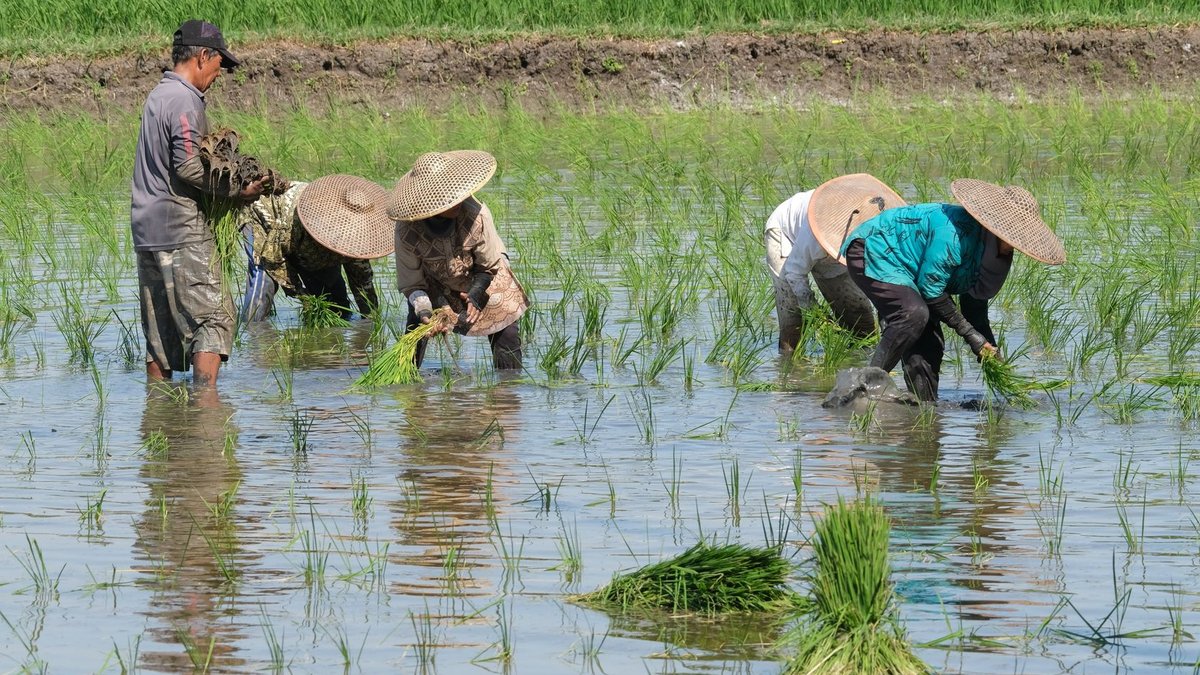
African farmers are bracing for drought in the months ahead, with Kenya’s maize yields forecast to be 28% below normal due to an “extremely poor rainfall performance,” according to the Famine Early Warning Systems Network. The emerging ‘Godzilla El Niño’ is expected to exacerbate the situation in southern Africa by the end of this year and into 2027, prompting countries like Zimbabwe to prepare for a significant increase in grain imports as local production is anticipated to decline.
Drought is becoming increasingly frequent in southern Africa, the Sahel, and the Horn of Africa, even in non-El Niño years, affecting agricultural production and food security. With the rainy season typically starting in October in countries like Zimbabwe, the need for alternative farming practices is growing. Maize yields in Kenya are expected to be lower than usual, while the impact of El Niño will be felt across the region.
Why simple irrigation is a challenge
To combat persistent food shortages in Africa, exacerbated by a harsher climate, innovative farming techniques are essential. Despite numerous promising advancements, implementing these on a large scale across Africa’s small farms remains a significant challenge. The core issue is the reliance on rain-fed agriculture, with approximately 95% of sub-Saharan African farmers depending solely on rainfall for crop irrigation. While irrigation is not a new concept, the commonly used methods are basic, involving simple pumps or floodwater diversion into ditches or reservoirs.
Five thousand years after irrigation was first practiced in Egypt’s Nile valley, making irrigation technology widely available south of the Sahara is a critical priority, says Tamer El-Raghy, managing director of the Acumen Resilient Agriculture Fund. He cites the example of a solar-powered irrigation company that Acumen has backed, noting that farmers using these new methods of irrigation had more than doubled their yields.
During periods of drought, El-Raghy argues, the ability to irrigate is the “difference between life and death.” Even so, the idea of extending irrigation is not without controversy. Sceptics warn that pumping water from underground sources can eventually deplete aquifers, worsening water security over the long-term. And significant amounts of water stored in small reservoirs is lost to evapotranspiration; the water that is left has a higher mineral concentration, which can lead to soils becoming salty and degraded.
Alexandra Perschau, head of cotton standards at the non-profit Aid by Trade Foundation, told African Business sister title New African last month that artificial irrigation from surface or groundwater sources is “strictly prohibited” under its Cotton Made in Africa certification scheme. It instead pushes for regenerative practices to increase water-holding capacity. Yet El-Raghy insists that there are “absolutely” ways of managing any negative side effects from irrigation. For one thing, the rollout of solar-powered pumping technology means farmers can avoid the emissions that belch out of conventional diesel-powered pumps. And, providing underground water resources are adequately mapped, he argues it is possible to limit the number of pumps in operation to levels that avoid depleting aquifers.
Technology and genetics
Large-scale agribusinesses in regions like California or Israel are increasingly relying on cutting-edge irrigation technology. Some farms now use digital sensors embedded in plant stems, which feed data into AI-systems that can direct water from irrigation systems to individual plants at the precise time it is needed. It is possible to replicate many of the benefits of ‘precision irrigation’ with much more basic technology.
Related Post: Africa needs own agricultural development bank
Tilahun Amede, director of climate sustainable productivity and resilience at agricultural development organisation AGRA, points out that technologies are becoming more affordable. “Now we have very cheap $25 sensors, which can guide farmers when to irrigate, so that they can really regulate the amount of water loss,” he says. He adds that simple storage tanks are key in helping farmers in India irrigate on a huge scale. Water is collected in these tanks during the monsoon. Then, during the dry season, water can be released through a network of thin pipes to drip onto crops, helping to minimise evaporation and waste.
The need for precision extends beyond irrigation to other types of inputs. Tilahun notes that over-applying nitrogen fertiliser causes the volume of biomass in a crop to increase – but the plant is then prone to losing a lot of water during drought conditions through evapotranspiration. Systems that apply fertiliser more precisely in lower volumes are therefore key in limiting water loss, he says.
AGRA has used a “environment approach,” he says, in developing a tool that can advise farmers on how to apply different types of fertilisers in different volumes, depending, for example, on whether the farmer is working on a hillside or in deeper soils in a valley. As well as improving inputs and agronomic practices, Tilahun says the other key factor in making yields more resilient is plant genetics. Several initiatives are underway to genetically engineer varieties of key food crops to improve their ability to grow during drought conditions.
Genetic improvement and AI research
The Kenya Agricultural and Livestock Research Organization and Egerton University near Nakuru announced in August that they are joining an international partnership to accelerate the development of improved potato varieties. The initiative, led by the Peru-headquartered International Potato Center and the James Hutton Institute, a UK-based research group, will use AI to help select varieties that will perform best during climate stress. These AI-driven insights will help scientists to genetically engineer varieties that can be more drought-tolerant. Field testing will take place in Kenya, with KALRO and Egerton engaged in supporting local adoption of improved varieties.
Tilahun says that while gene editing can play a role, conventional methods of genetic improvement still have “a long way to go” on the continent. “The challenge we face in Africa is even the current genetic potential is not exploited yet,” he says. There are many examples where crop varieties that have high genetic potential to perform well in specific niches are already well-known, yet a lack of critical inputs and poor management practices mean these varieties are not widely grown.
Success stories and the need for simple solutions
Yet Tilahun does highlight that Africa can draw upon success stories. In Ethiopia, for example, maize yields have increased from just 1.2 tonnes per hectare in the 1990s, to 4 tonnes per hectare today. This progress was possible through a rigorous focus on addressing chronic problems in Ethiopia’s agricultural sector, with joined up action from government agencies and donor partners.
In an age of growing climate unpredictability and increasingly ferocious drought, governments will need to pay much greater attention to food security. The key will not be so much what happens in the lab with advanced AI and genetic engineering – but in making sure that cheaper and simpler versions of these technologies can make it into the hands of the continent’s farmers.


