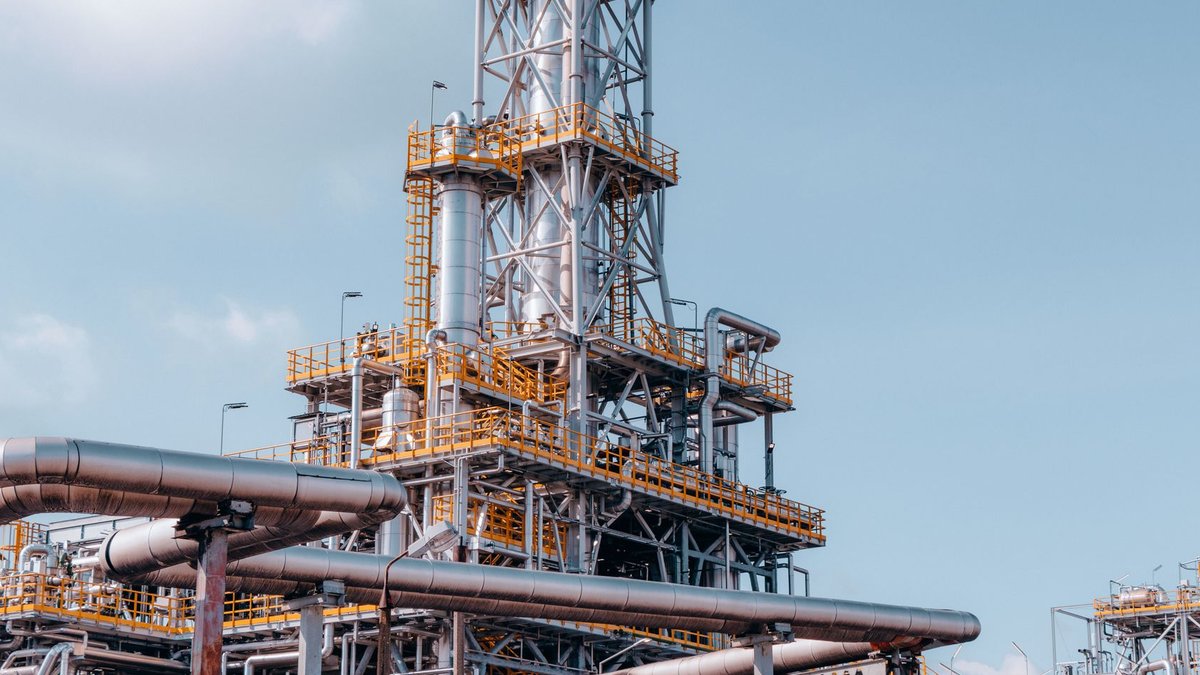
Africa’s richest man, Aliko Dangote, launched what will be the continent’s largest initial public offering on 14 September, marking a milestone for the Nigerian Stock Exchange. The Dangote Refinery and Petrochemicals FZE is offering 4.1 billion shares at 525 naira ($0.39) each, aiming to raise 2.15 trillion naira ($1.63 billion). The proceeds will fund doubling the refinery’s capacity to 1.4 million barrels per day, expand fuel storage and distribution, and support future growth.
The offering, dubbed the “people’s IPO” by CEO David Bird, targets up to 10 million retail investors across Nigeria and Africa, with a minimum purchase of five shares costing 5,250 naira ($3.94). Dangote himself rang the opening bell at the Nigerian Exchange (NGX) to signal the start of the share sale.
“There are moments in a nation when an occasion becomes greater than the event itself, when a transaction becomes a statement,” Dangote said. “Today is not only about listing a company, it is about listing a new possibility for Nigeria, for Africa and the black race.”
Digital Platform Struggles During IPO Launch
The IPO has already strained digital investment platforms. Bamboo reported app outages after traffic surged 10-fold within 30 minutes of the launch. Cowrywise and InvestNaija also faced difficulties managing demand, highlighting the scale of retail interest.
Market Capitalization and NGX Dominance
The refinery’s listing could reshape the NGX. With its 4.1 billion shares, Dangote Refinery will represent nearly 29% of the exchange’s market value immediately, according to Rolake Akinkugbe-Filani of EnergyInc Advisors. Post-listing, the company’s market capitalization will reach approximately 65 trillion naira, accounting for 25% to 30% of the entire NGX, as analyst Happiness Erondu of Zedcrest Securities notes.
To attract foreign investors, the company plans dollar dividends for shares purchased in local currencies, hedging against naira devaluation. This relies on projected annual export revenue of $6.4 billion. Details are pending approval from Nigeria’s Securities and Exchange Commission and the NGX, but if approved, the model could set a precedent for export-focused firms, Akinkugbe-Filani says.
Retail investors are incentivized with bonus shares for long-term holdings. Subscribing to at least 10 units qualifies buyers: holding for 12 months earns one additional share, with another granted after an extra 12 months. Dangote envisions a secondary listing outside Africa within three years, likely in the U.S.
The refinery’s journey from concept to operation has been lengthy. Initial plans in 2013 aimed for a 2016 completion, but construction began in 2016 with multiple delays. By late 2023, it reached full capacity, expanding to 700,000 barrels per day, with plans to hit 1.4 million by 2029 via a $14.3 billion investment.
Revenue Growth and Global Market Disruption
Revenue surged from $7.1 billion in 2024 to $14.2 billion in 2025, according to the prospectus. In the first half of this year, revenue hit $13.91 billion, driven by higher energy prices amid Middle East conflicts. The refinery turned profitable within the same period, posting $1.82 billion in net income after years of losses.
The facility has disrupted global markets, displacing European suppliers in West Africa. Currently, it ships the largest volume of jet fuel to Europe, Dangote noted, crediting Nigeria for keeping European airlines operational. It also plays a key role in global fertilizer trade amid supply shortages from the Middle East, Ukraine, and Russia, while producing 19 petrochemical by-products, including plastics and resins.
Global fertilizer markets have become a major focus as supply disruptions from the Middle East, Ukraine and Russia create shortages worldwide. The refinery produces 19 petrochemical by-products including plastics, resins and other materials that position it as a key supplier in multiple industries.


