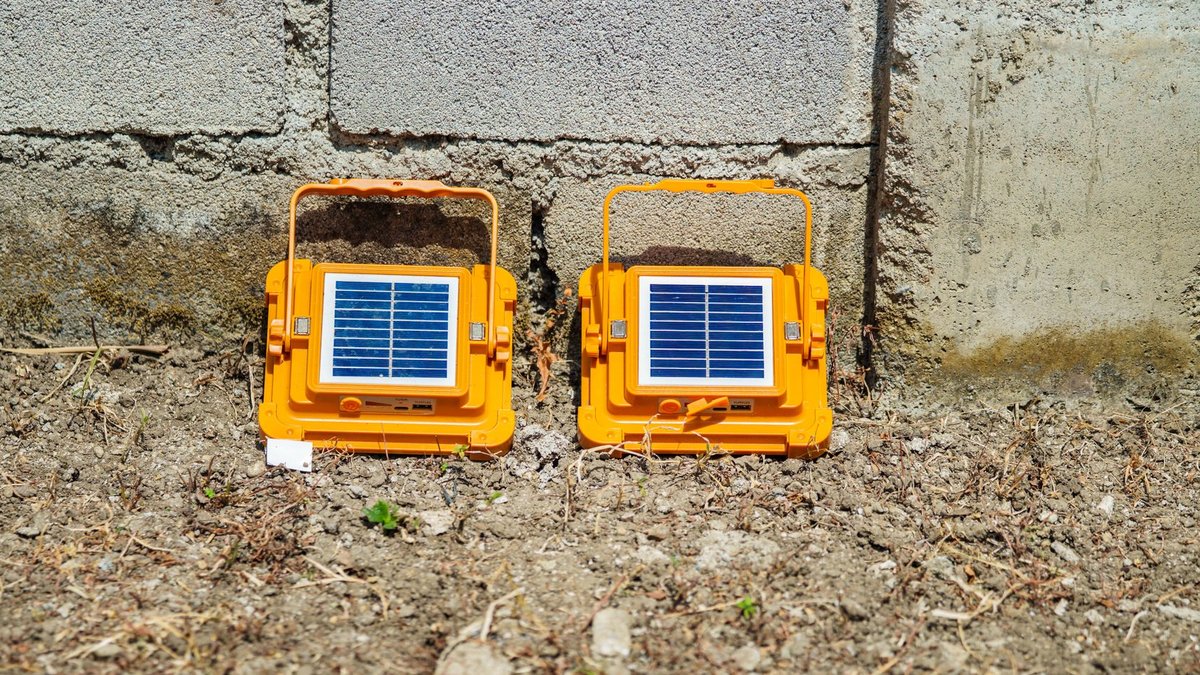
DR Congo is importing more solar panels than ever, with mining companies driving a surge in demand for off-grid power. The country—one of the world’s least electrified—struggles to connect its 97.5 million people to the grid, where only 21.5% had access in 2024. New data shows solar power could reverse this trend.
Ember, an energy think tank, reports DR Congo became Africa’s fourth-largest importer of Chinese solar panels over the past year, spending $249 million on panels and $439 million on batteries. The think tank projects solar installations will rise 544% year-on-year by 2026, with this year’s new capacity already matching 63% of the country’s existing grid generation.
The growth is led by mining firms in Katanga, the center of DR Congo’s copper industry. At the Kamoa Copper mine near Kolwezi, 357,000 solar panels now cover an area the size of 230 football pitches. Installed by CrossBoundary Energy in just 14 months, the project delivers 233 MW of solar power alongside 526 MW-hour of battery storage, ensuring a steady 30 MW output even at night.
Richard Stanford, CrossBoundary’s chief technical officer, confirms the facility has already exceeded expectations. “What we’re showing now, in the first month of operation, is that it’s working,” he states.
The rapid deployment highlights solar’s key advantage: modular designs and mass-produced components allow projects to launch far faster than traditional power sources. This contrasts with DR Congo’s stalled hydropower plans, particularly at the Inga Rapids, where two existing dams remain underutilized. Even with a $250 million World Bank commitment in 2025 for Inga 3, full completion is still 8–10 years away.
Mini-grids and battery rentals compete for rural electrification
Mini-grids, small-scale systems powered by solar and backed by batteries or diesel, are now the most practical way to reach remote communities. Companies like WeLight and Husk Power Systems are already active in DR Congo, though financing remains a challenge. The government-backed Mwinda Fund, managed by GreenMax Capital Group, plans to raise $500 million to support off-grid projects, with fundraising set to begin early next year.
Not all experts agree mini-grids alone will solve the problem. MOPO, a green tech firm, argues portable battery rentals, recharged at solar-powered hubs, could serve far more people than fixed mini-grids. Its model, tested in DR Congo and other African nations, targets both low-income households and higher-power users, offering greater flexibility.
With 80 million Congolese still without electricity and the population growing by 4 million annually, the challenges remain immense. However, the solar boom suggests progress is accelerating.
Mining giants fuel solar expansion with new partnerships
The success at Kamoa Copper has prompted further expansion. The mine operator announced a partnership with Green World Energie to add a second solar-plus-battery installation, supplying an additional 30 MW of baseload power. CrossBoundary Energy officials are also reviewing plans to expand the existing solar field and replicate the model at other mining sites in Katanga. The company is competing in three separate tender processes targeting independent power producers for additional mining customers.
As DR Congo works toward its electrification target of 62% by 2030, the combined efforts of expanding solar installations at industrial sites and growing off-grid solutions suggest a multi-faceted approach to closing the power gap. While the latest phase of Inga development, projected to generate up to 11 GW, remains a long-term prospect, immediate progress depends on renewable projects already in motion.


