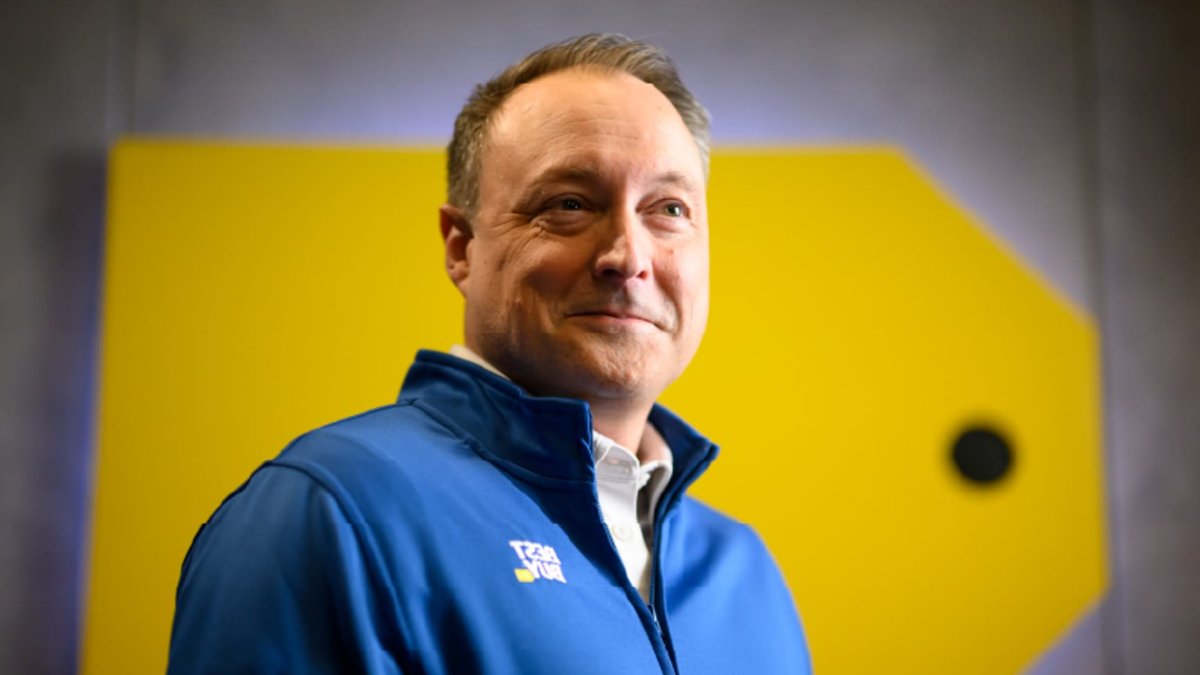
Best Buy’s incoming CEO plans to reduce the company’s physical presence before pursuing expansion.
Jason Bonfig, who will succeed Corie Barry this fall, told CNBC the electronics retailer is focused on opening smaller stores to serve markets too small for its typical 30,000-square-foot locations. The approach represents a change for a chain that once depended on large showrooms to attract customers.
Two new stores, two different sizes
This week, the company opened a 15,000-square-foot store in Jonesboro, Arkansas, and a 28,000-square-foot location in Cape Cod, Massachusetts. The Jonesboro store marks Best Buy’s return to the town after a tornado destroyed its previous location. The Cape Cod outlet is larger than the standard 20,000- to 25,000-square-foot format but remains below the size of flagship locations, some of which exceed 40,000 square feet.
Bonfig described the smaller stores as an addition rather than a replacement. He cited Canada, where the retailer has operated locations as small as 7,000 square feet, as evidence the model can succeed. “It lets us serve more customers and markets we previously couldn’t,” he said.
Related: Copper hits record high amid economic signals
Shares have declined about 20% over the past five years, reaching a high of $138 in late 2021. The company anticipates flat comparable sales this fiscal year, with projections ranging from a 1% decline to a 1% increase. While the most recent quarter outperformed Wall Street expectations, it came on the heels of years of declines.
AI and the human element
Bonfig views artificial intelligence as both a product and an operational tool. He has said he’s looking into ways to capitalize on the artificial intelligence boom and Best Buy’s spot in that next chapter.
He stressed that AI will not replace employees. “We’re seeing interest, and we want to ensure the Best Buy experience remains consistent,” Bonfig said. “But AI serves as a supplement to the people who drive the business.”
Retailers have long debated optimal store size as online shopping changes consumer habits. Big-box chains like Walmart and Target have tested smaller urban formats, while others, such as Macy’s, have closed underperforming stores to concentrate on high-traffic areas. Best Buy’s strategy—testing mid-sized locations in smaller communities—may offer a compromise, though its ability to revive stagnant sales remains uncertain.
Related: Albertsons Stock Falls on Weak Sales Outlook
Bonfig linked recent challenges to a post-pandemic demand shift, noting that consumers accelerated tech purchases during COVID-19, creating a subsequent lull. “There was a pull-forward effect,” he said. “Best Buy hasn’t lost its place. The past few years have just been unusual.”
The new CEO said success will depend on customer response, particularly in categories like televisions, where the company is refining selections to encourage upgrades. He intends to build on Barry’s existing strategy rather than replace it. “Corie’s approach was strong, and mine extends that,” he said.
For now, the retailer is counting on smaller stores to help it reach shoppers in markets it had previously ignored.


