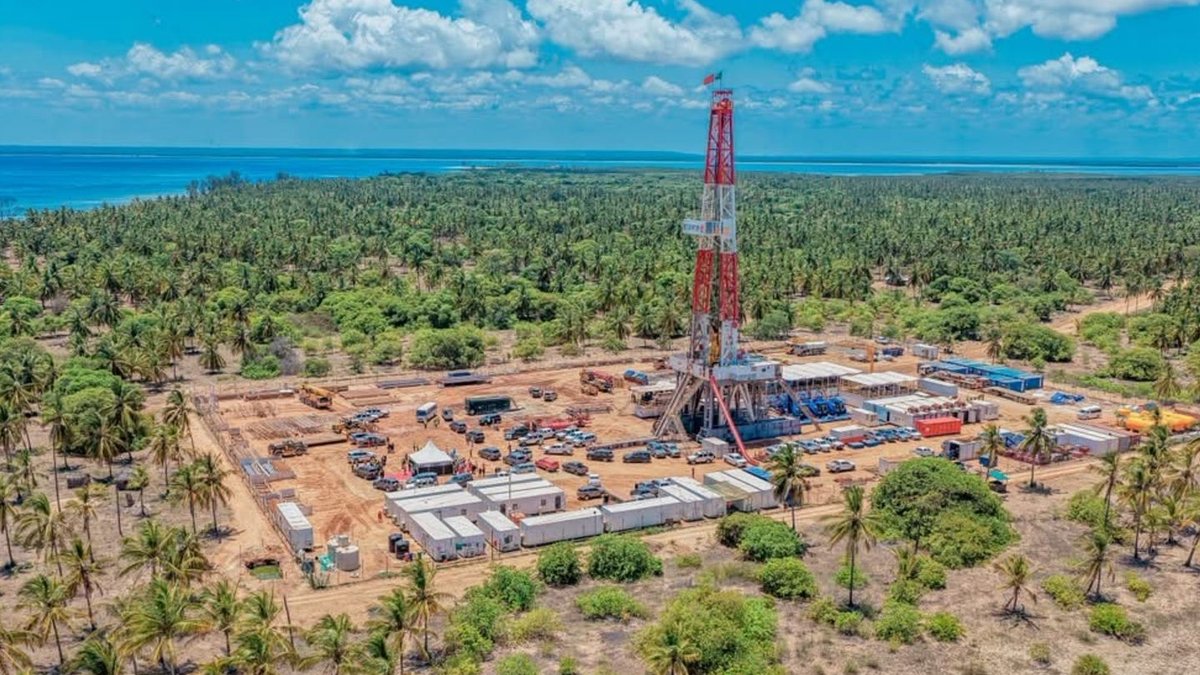
Mnazi Bay natural gas discovery is prompting Tanzania to broaden its petroleum exploration programme, with new licences granted for four blocks and plans to boost domestic gas supply for power and industry.
State-led licences broaden exploration footprint
Vice President Deogratius Ndejembi witnessed the signing of four petroleum exploration licences for the Tanzania Petroleum Development Corporation (TPDC). The licences cover the Eyasi-Wembere, Lindi-Mtwara, West Songo Songo and Mnazi Bay North blocks.
Energy Minister Dr Juma Zuberi Homera said the allocations reflect a policy shift toward greater national participation and higher economic returns from Tanzania’s hydrocarbon resources.
Under the new agreements, TPDC’s stake in the Mnazi Bay venture rose from 20 percent to 40 percent, while French partner Maurel & Prom retains 60 percent. The change is expected to give the government a stronger voice in project decisions.
The Petroleum Upstream Regulatory Authority welcomed the licensing round, emphasizing compliance with environmental rules and encouraging Tanzanian professionals to take part in the activities.
These licences are part of a broader effort to improve geological knowledge and identify additional commercially viable resources across the country.
Mnazi Bay well delivers higher output
The Kasa-1X ST2 exploration well, drilled by TPDC and Maurel & Prom, was announced on 27 October with an estimated 223 billion cubic feet of gas, while the operator’s preliminary figure stood at about 200 billion cubic feet.
Initial production forecasts projected roughly 30 million cubic feet per day for a decade, contingent on development plans. Subsequent development wells MB-5 and MS-2 reportedly lifted daily output by more than 65 million cubic feet.
By October, the company reported total production near 130 million cubic feet per day, strengthening supplies for electricity generation and other domestic users.
Read Also: Kulipa Secures $6.2M to Expand Stablecoin Payments Globally
More than 80 percent of the gas from Mnazi Bay is routed to the Tanzania Electric Supply Company facilities in Mtwara and Dar es Salaam, highlighting the field’s contribution to the national grid.
In addition to power, the government is expanding gas use for transport and industry, with 22 compressed natural gas stations and 20 vehicle-conversion workshops recorded by September 2026.
Infrastructure upgrades support growing demand
A 35-kilometre pipeline linking the Ntorya gas field to the Madimba processing plant is 74 percent complete, according to the energy ministry. The line is slated to deliver additional gas for electricity, industry and domestic consumption.
Domestic consumption is diversifying: six industries, 21 institutions and roughly 5,000 households have been connected to the gas distribution network.
Government officials are courting private investors for small-scale liquefied natural gas projects, with four prospective partners discussing developments, three of which target the Mtwara region.
Economic impact and local participation
Approximately 200 Tanzanians have gained employment through companies involved in the Mnazi Bay drilling programme, according to the energy minister.
Local firms have secured 35 contracts worth over TZS 20 billion, indicating growing opportunities for domestic businesses in the sector.
Nationally discovered gas resources total about 57.54 trillion cubic feet, with 47.13 trillion offshore and 10.41 trillion onshore, providing a sizable base for future projects.