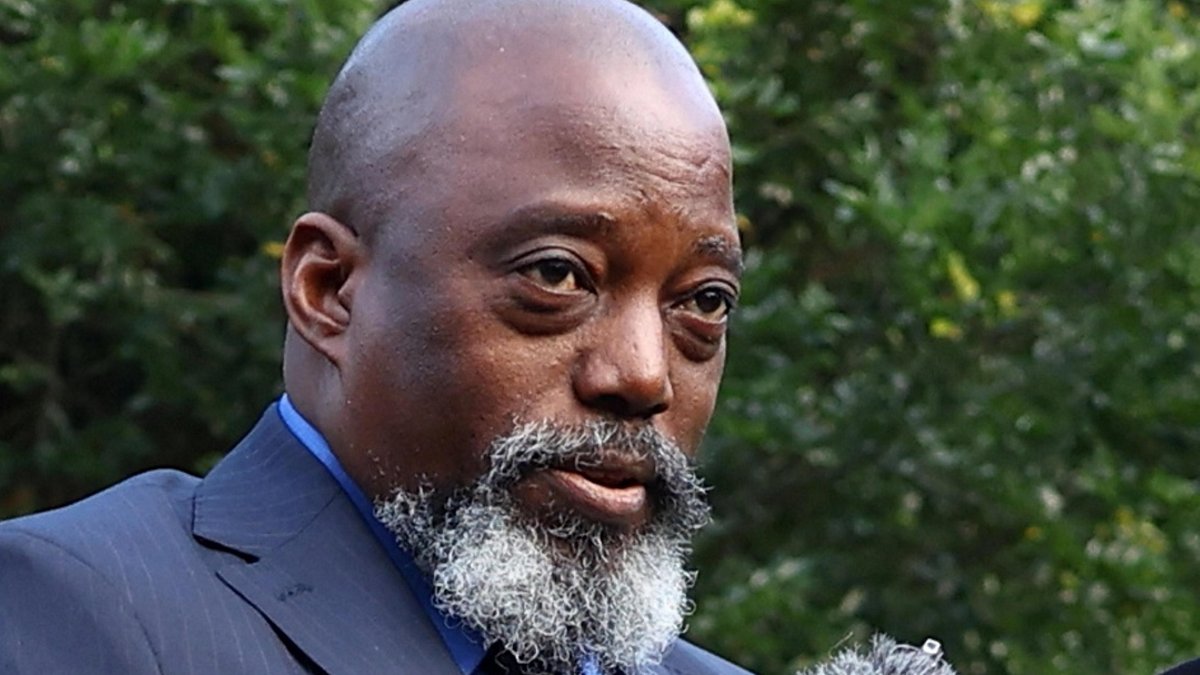
Joseph Kabila, the former president of the Democratic Republic of Congo (DRC), has now taken formal command of a rebel alliance in the eastern region, intensifying the confrontation with President Félix Tshisekedi. On October 12, he introduced the Front pour la Refondation de la Nation (FRN) during a press conference in Goma, a city that has been under rebel control since early 2025. This coalition merges the dissolved Alliance Fleuve Congo (AFC) with the M23, a group frequently accused of receiving backing from Rwanda, though Kigali rejects these claims.
Kabila, who led the DRC for nearly two decades, now heads the coalition, while key figures from the AFC and M23 hold deputy positions. Corneille Nangaa, a former electoral-commission official and AFC leader, and Bertrand Bisimwa, a senior M23 political leader, serve as vice-presidents. Sultani Makenga, the longtime M23 military commander, continues to oversee the armed wing, now renamed the Congolese Revolutionary Army.
This development confirms Kabila’s direct involvement in the insurgency after months of speculation. Congolese authorities had previously accused him of supporting the AFC-M23 alliance, issuing an in absentia death sentence in September 2025 for treason, war crimes, and crimes against humanity. By assuming leadership in rebel-held territory, Kabila abandons any remaining claims of neutrality. The move also formalizes the AFC’s dissolution, centralizing authority under the FRN.
Kabila’s return fuels Congo’s political cycle
Kabila’s return to active politics traces back to his early career. He began as a junior officer in the Rwandan- and Ugandan-backed rebellion that overthrew Mobutu Sese Seko in 1997. After inheriting the presidency in 2001, he ruled until 2019 and previously defeated an earlier M23 insurgency in 2013. Now, the same commanders he once suppressed are serving under his command, completing a full political cycle. The FRN’s formation also heightens regional instability, as eastern Congo’s rich deposits of cobalt, coltan, and gold remain both a strategic resource and a conflict driver.
Read Also: Family Bank debuts as NSE’s top private listing in years
Three days before the FRN’s announcement, Kabila delivered a speech accusing Tshisekedi’s administration of corruption, ineffective governance, and military failures. He also criticized a minerals agreement between the DRC and the United States. With Tshisekedi nearing the end of his second and final constitutional term in 2028, pressure on his government has grown due to stalled ceasefires and mediation efforts, including those led by Qatar and the U.S. The collapse of negotiations has left the eastern conflict unresolved, worsening the humanitarian crisis.
Rebel alliance tests regional stability and diplomacy
International attempts to resolve the conflict face new challenges due to the FRN’s emergence. A former head of state leading a territorial rebellion increases the political risks of military intervention and weakens diplomatic efforts. The United Nations had already flagged in mid-2026 that Kabila’s potential return to power was a plausible scenario. Whether the coalition can expand its influence beyond eastern Congo or instead solidify the country’s division remains uncertain.
Meanwhile, artisanal mining—long tied to armed groups—continues unchecked in FRN-controlled zones, with smuggled minerals sustaining both local economies and regional militias.
Tshisekedi’s government has rejected direct negotiations with the FRN, insisting on inclusive talks involving all armed factions. However, regional powers like Rwanda and Uganda maintain indirect contacts with Kabila’s delegation, complicating efforts to isolate the coalition.


